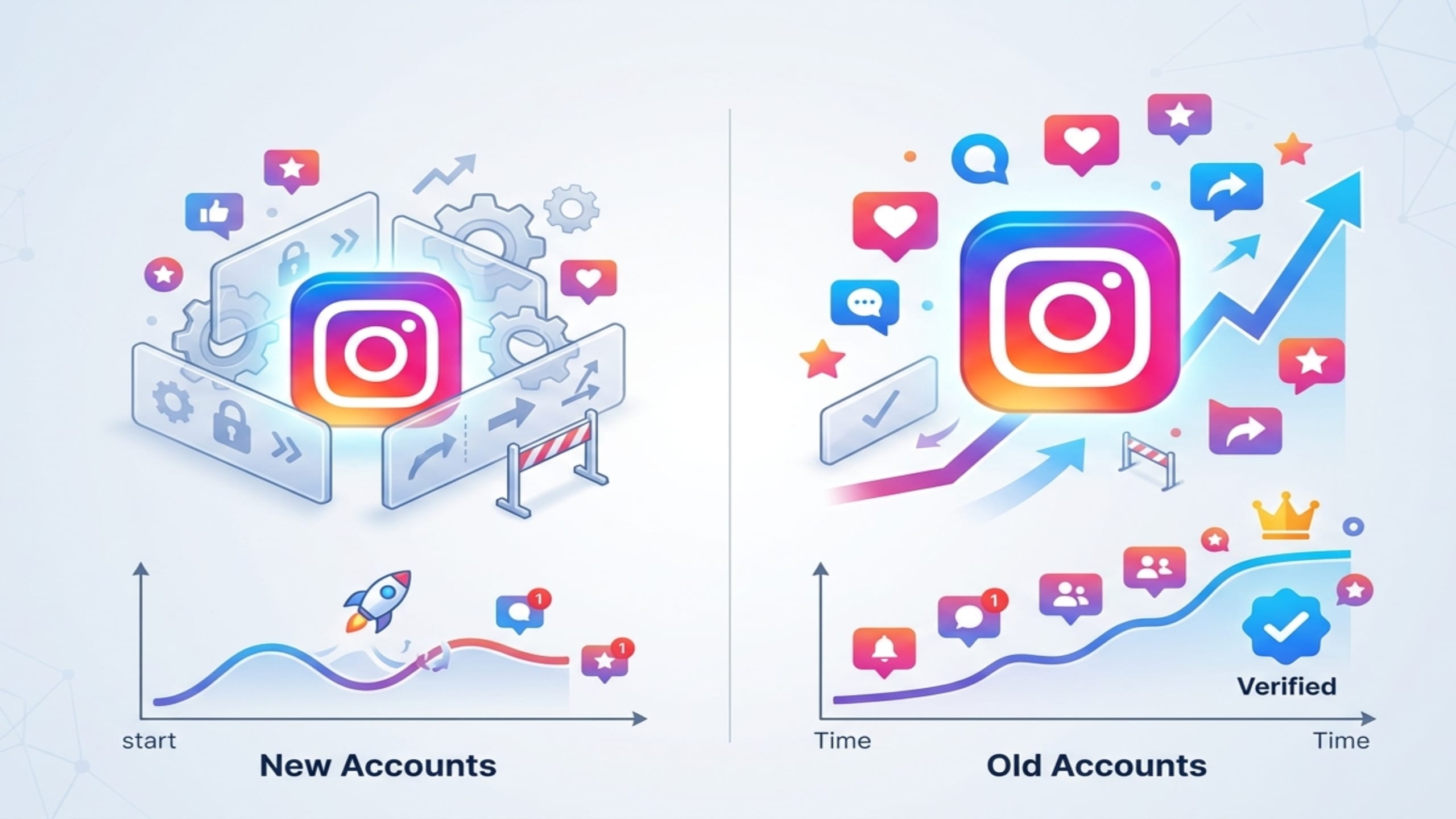
New Instagram accounts don’t start on an equal playing field—and the algorithm is a big reason why. Instagram’s ranking system relies heavily on historical engagement data, which means accounts without a track record face a steeper climb to reach new audiences. Understanding exactly how that bias works is the first step to overcoming it.
This post breaks down how Instagram’s algorithm evaluates new accounts differently from established ones, what signals actually drive early visibility, and which strategies consistently help newer profiles build momentum faster. Whether you’re launching a brand-new account or restarting after a long period of inactivity, the tactics here are grounded in how the algorithm actually operates—not wishful thinking.
What the Instagram Algorithm Actually Measures
Instagram doesn’t use a single algorithm. It uses several, each tailored to a specific surface: Feed, Explore, Reels, and Stories. But across all of them, a few core signals consistently shape how content gets ranked.
The algorithm weighs engagement signals most heavily—likes, comments, shares, saves, and watch time. Beyond that, it factors in relationship signals (how often someone interacts with your account), content relevance (how well your post matches a viewer’s past interests), and recency (how recently the content was published).
For new accounts, the problem is straightforward: most of these signals start at zero. There’s no interaction history, no established audience, and no baseline that tells the algorithm who your content is for. That uncertainty translates directly into limited initial distribution.
Why New Accounts Face an Early Reach Disadvantage
When Instagram’s algorithm encounters a post from an unfamiliar account, it runs a small test. Your content gets shown to a limited initial audience—typically your existing followers, if any, plus a narrow test pool. If engagement rates from that sample are strong, the algorithm expands distribution. If they’re weak, reach stays limited.
Established accounts have a natural edge here. They’ve already signaled to the algorithm what type of content performs well, which audiences respond to it, and how engaged their followers tend to be. That history acts as a trust score. New accounts have to earn it from scratch.
The algorithm isn’t penalizing new accounts—it simply has no evidence to go on. Your job in the early phase is to give it that evidence as quickly as possible.
There’s also the matter of follower quality. A new account’s earliest followers are often friends or people curious about a new page—not necessarily the target audience who will engage consistently. Low engagement from a mismatched initial audience can inadvertently train the algorithm to underestimate your content’s potential.
How Established Accounts Maintain Their Algorithmic Advantage
Older accounts that have maintained consistent activity accumulate a compounding advantage over time. Here’s how that plays out in practice:
Audience affinity: The algorithm tracks how often individual users engage with an account. Established accounts with loyal followers benefit from a feedback loop—high engagement generates more distribution, which attracts more engaged followers, which generates more engagement.
Content classification: Over time, Instagram builds a clearer picture of what niche or category an account fits into. This makes it easier to match content with relevant audiences on Explore and Reels. A new account posting across multiple topics can confuse this classification early on.
Credibility signals: While Instagram has never confirmed that follower count directly boosts distribution, accounts with large, engaged followings are more likely to be reshared—and shares are one of the strongest signals that push content to new audiences.
Reels distribution history: Instagram has noted that Reels are the primary discovery surface. Accounts with a history of high-performing Reels carry that track record into future posts. A new account posting Reels starts without that baseline.
How the Algorithm Evaluates New Accounts Differently
The Probationary Window
New accounts go through an informal period—roughly the first 30 to 90 days—where the algorithm is still learning how to classify them. During this time, distribution is cautious. Instagram is essentially gathering data before committing to wider amplification.
This doesn’t mean growth is impossible in the early phase. It means you need to be deliberate. Inconsistent posting, abrupt niche pivots, or a sudden spike in low-quality followers can disrupt the algorithm’s ability to form an accurate picture of your account.
Engagement Rate vs. Absolute Numbers
Here’s where new accounts can actually hold their own: the algorithm doesn’t care only about raw engagement numbers. It weighs engagement rate—the ratio of interactions to reach. A new account with 200 followers and 40 likes per post has a 20% engagement rate. An established account with 50,000 followers and 400 likes per post has less than 1%.
Proportionally, that new account is performing far better. The algorithm recognizes this and can reward high-engagement content with expanded distribution even early on.
Reels as a Leveler
Reels remains the most accessible discovery tool for new accounts. Unlike Feed posts—which primarily circulate among existing followers—Reels get distributed to non-followers based on interest matching. Instagram has confirmed this publicly, and the behavior is consistent with what creators report.
A new account with zero followers can post a Reel and reach thousands of people if the watch time and share rate are strong. This doesn’t happen automatically or reliably, but the potential is real in a way it isn’t for Feed posts alone.
What New Accounts Should Prioritize in the First 90 Days
Define your niche tightly from day one
The algorithm classifies your content based on what you post consistently. Accounts that post across unrelated topics are harder to categorize, which limits how precisely Instagram can match them with relevant audiences. Pick a specific topic area and stick to it for at least the first two to three months.
Post at a sustainable frequency—not an aggressive one
A common mistake is posting in bursts followed by long gaps. The algorithm responds better to consistency than to volume. Three or four quality posts per week, published reliably, outperform seven posts in week one and zero in week three.
Prioritize Reels, especially in the first phase
Given that Reels offer the highest organic discovery potential for new accounts, they deserve a disproportionate share of your early effort. A short, well-edited Reel with a clear hook in the first two seconds tends to outperform a longer, more polished one that loses viewers early.
Engage actively within your niche
The algorithm monitors not just what’s posted but how accounts behave. Leaving thoughtful comments on posts from accounts in your niche—not generic “great post!” responses—signals relevance and can draw reciprocal engagement from real users who are already interested in your topic.
Use saves as a growth target, not just likes
Saves are one of the strongest engagement signals on Instagram because they indicate that a user found the content valuable enough to return to. Content that gets saved consistently—how-to posts, reference guides, dense information—tends to get a sustained algorithmic boost rather than a short spike.
Can a New Account Outgrow an Old One?
Yes, and it happens regularly. The algorithm doesn’t lock in a permanent hierarchy based on account age. What it values is recent, consistent engagement—and an older account that has gone dormant or pivoted away from its original niche can actually lose algorithmic ground to a newer, more active account in the same space.
A content manager who ignores consistent posting and lets a previously strong account go quiet for six months will often see newer competitors outrank them, even with fewer total followers. Engagement recency matters more than seniority.
This also means accounts that acquired large followings through giveaways, follow-for-follow tactics, or purchased followers are often outperformed by smaller accounts with genuinely engaged audiences. The algorithm is measuring signal quality, not signal volume.
Signals That Accelerate Growth for New Accounts
Some behaviors consistently help new accounts build algorithmic momentum faster:
- Strong hook in the first 1–2 seconds of video: Watch time is a primary ranking signal for Reels. Losing viewers immediately after posting depresses your metrics.
- Pinning your highest-performing content: The three pinned posts at the top of your profile create a first impression. Pinning your strongest work increases the chance a new profile visitor follows you.
- Collaborating via Collab posts: Instagram’s Collab feature lets two accounts co-author a post that appears on both profiles. For a new account, partnering with an established account in the same niche can expose you to a warm, relevant audience immediately.
- Responding to every early comment: In the first hour after publishing, comment activity signals to the algorithm that the content is generating conversation. Replying to comments keeps that thread active and visible.
- Using location tags and relevant hashtags sparingly: Three to five highly relevant hashtags tend to outperform large clusters. Hashtag stuffing no longer improves reach and can flag content as spam-adjacent.
FAQ
These questions come up regularly from people building new Instagram accounts or trying to understand why their reach has stalled.
Does Instagram shadowban new accounts?
Instagram has acknowledged that it may restrict content distribution in specific situations—such as when an account violates community guidelines or when hashtags are overused in ways that resemble spam. However, there is no confirmed, blanket policy that new accounts receive a temporary distribution limit purely because they’re new. The limited early reach most new accounts experience is better explained by the algorithm’s lack of data than by an active penalty.
How long does it take for a new Instagram account to gain traction?
There’s no universal timeline, but most accounts that see consistent growth start to notice meaningful momentum between the 60- and 120-day mark, assuming they’re posting consistently in a defined niche. Accounts that use Reels from the start often reach this inflection point faster than those relying only on Feed posts.
Does posting at the “right time” matter for new accounts?
Timing is less critical for new accounts than it is for established ones with large follower bases. Since new accounts get limited Feed distribution to followers anyway, the bigger lever is content quality and engagement rate—not the exact hour of publication. That said, posting when your target audience is most active doesn’t hurt, especially as your following grows.
Should a new account use hashtags, and how many?
Hashtags still provide a modest discoverability boost, particularly for niche topics. The current consensus among creators and social media researchers is that three to eight relevant, specific hashtags are more effective than 30 generic ones. Avoid using the same set of hashtags repeatedly across every post—varying them slightly signals a more organic content pattern to the algorithm.
Is it worth switching to a Creator or Business account from the start?
Creator and Business accounts unlock access to Instagram Insights, which shows you exactly how each post performed—reach, profile visits, follows gained, and engagement breakdown. For any account trying to grow intentionally, this data is worth having from the beginning. There’s no confirmed evidence that account type directly affects distribution, so the main reason to switch is access to analytics.
Conclusion
Instagram’s algorithm doesn’t favor new accounts—but it doesn’t make growth impossible either. The early disadvantage comes from a data gap, not a deliberate ceiling. Establish a clear niche, keep engagement rates high, and lean into Reels as your primary discovery tool, and the algorithm will start building the picture it needs to distribute your content more broadly.
The real difference between new accounts that stall and those that break through usually isn’t posting frequency or follower count. It’s whether the content generates strong signals—saves, shares, and watch time—consistently enough that the algorithm keeps testing it with new audiences.
If you’re starting from scratch, audit your first 10 to 15 posts honestly: are they generating saves? Are viewers watching past the halfway mark? Those two metrics will tell you more about your algorithmic trajectory than any vanity stat. Adjust based on what the data shows, and your new account will close the gap with established competitors faster than the algorithm’s early caution might suggest.